2026 Top Lever Block Guide How to Use in Tight Spaces?

Time:2026-11-08 Author:Aria
0%

A lever block can lift or tension a load where a larger hoist cannot fit, but limited clearance leaves little room for error. How to use a lever block in tight spaces starts with checking the load path, anchor point, rated capacity, and handle swing before applying force. Small clearance matters. The chain must run freely, without rubbing against beams, sharp edges, or the load. A compact setup is not automatically a safe one.

The risk is worth taking seriously. Liberty Mutual’s 2024 Workplace Safety Index estimated that overexertion involving outside sources cost U.S. employers $12.84 billion in 2022. That broad category is not specific to lever blocks, but it underscores the value of controlled material handling. ASME B30.21 provides industry guidance for lever hoists, while the manufacturer’s instructions define the limits of a particular model. This guide focuses on practical checks: inspecting the chain and hooks, positioning the operator outside the load’s path, and taking up slack without shock loading. Never exceed the marked capacity or use a damaged unit. Even experienced operators can misread a cramped setup; pause and reassess if the handle cannot move freely or the load begins to tilt. No guesswork. A few details still depend on the jobsite, so this guide cannot replace a competent assessment or the hoist’s instructions.
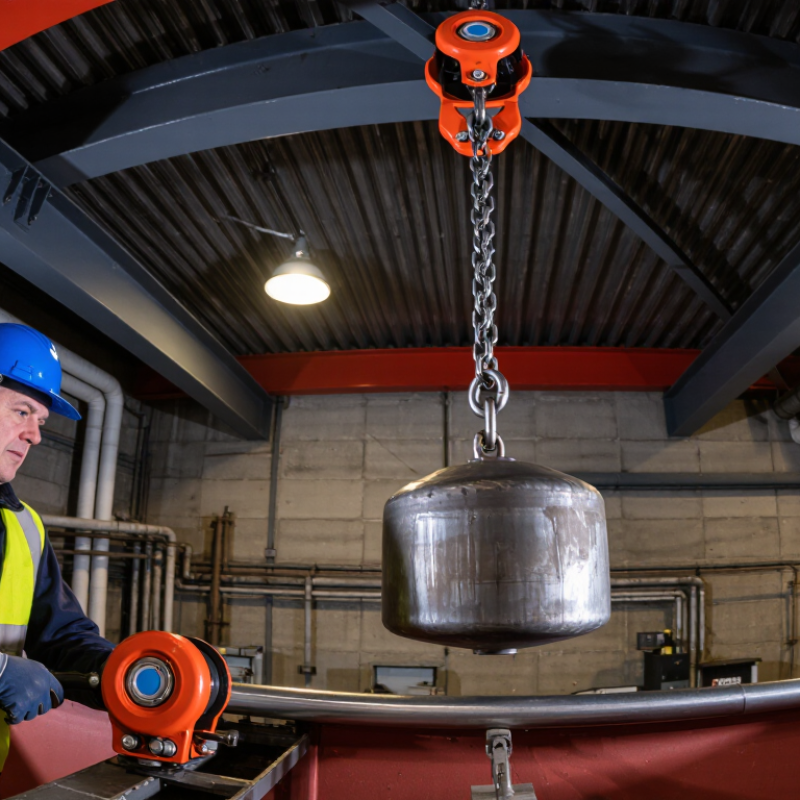
2026 Top Lever Block Guide How to Use in Tight Spaces?

Lever Blocks: Components, Uses, and Operating Principles

A lever block is a manually operated hoist for lifting or pulling a suspended load. Its main parts are the load chain, hooks with safety latches, a lever, internal gears, and a friction brake. Pulling the lever moves the gears, which draw the chain through the housing. The brake helps hold the load when the operator releases the handle. Small, but powerful.

In a cramped workshop or between structural members, a compact lever block can be easier to position than a larger hoist. Check the marked capacity against the full load, including attached rigging. Inspect the chain for twists, damaged links, or corrosion, and make sure each hook sits squarely on a suitable anchor. Leave enough room for the lever to travel through its operating arc. A short handle swing is not a reason to force or extend it.

Before lifting, take up slack slowly and watch for shifting or snagging. Keep the load balanced, stay clear of its path, and never use the block to lift people. Side-pulling can stress parts that are intended for an in-line load. In tight spaces, it is tempting to improvise with a poor anchor or awkward chain route. That is a warning sign, not a shortcut; reposition the equipment or consult a qualified lifting professional. Check twice.

Choosing a Lever Block for Tight Spaces

2026 Top Lever Block Guide: How to Use in Tight Spaces?

Choosing a Lever Block for Tight Spaces

In a cramped bay, compare more than rated capacity. Check the block’s headroom, body width, hook opening, and handle sweep against the actual work area. A handle that strikes a beam can prevent controlled operation. Check that the load chain can travel freely without rubbing against steel edges, and ensure the upper hook can connect securely to a suitable anchor. Choose capacity from the load’s verified weight, including any lifting attachments. Never use a lever block to pull sideways unless its instructions specifically allow it.

Space is unforgiving.

Before buying, review the manufacturer’s dimensional drawing and operating manual, then check clearances on site. A short unloaded movement can reveal collisions; a small, controlled test lift can confirm balance and chain movement. Keep hands clear of pinch points, and stop if the load shifts or the chain binds. The U.S. Bureau of Labor Statistics recorded 5,283 fatal work injuries in 2023 across all occupations. That figure is not specific to hoists, but it reinforces why careful equipment selection and safe work practices matter.

Small details matter.

Even experienced crews can overlook handle clearance when the load is already waiting.

Inspecting the Block, Load, and Anchor Point

In a tight space, inspect the lever block before attaching it. Check the identification plate, hooks, latch, chain, and operating handle for damage or distortion. Look for stiff links, cracks, corrosion, and signs of unauthorized repair. The chain should run freely through the body. Stop if it binds. ASME B30.21 provides inspection and operating guidance for manually operated lever hoists; follow the applicable equipment instructions and site procedures.

Next, confirm the load’s actual weight and center of gravity. A load that looks balanced on the floor can tilt once lifted. Keep the chain straight and avoid side-pulling or twisting the hoist. Check that the anchor point is designed for the expected force, not merely convenient to reach. Inspect its supporting structure, too. A sound hook cannot make a weak anchor safe. I still find cramped setups invite rushed guesses. That is worth questioning.

The risk is not theoretical. The U.S. Bureau of Labor Statistics reported 5,283 fatal work injuries in its 2023 Census of Fatal Occupational Injuries. That figure covers all workplace causes, not lever-block incidents specifically, but it underscores why load paths deserve deliberate checks. Before lifting, clear hands and feet from pinch points, take up slack slowly, and pause just above the support to check balance and anchor stability. If anything shifts, lower the load and reassess. A tight clearance is not a reason to skip a check.

2026 Top Lever Block Guide: How to Use in Tight Spaces? — Inspecting the Block, Load, and Anchor Point
Stage Inspection Point What to Check Acceptable Condition Action if Not Acceptable
Before setup Rated capacity and identification Read the block’s identification plate or markings. Confirm its rated capacity, operating instructions, and inspection status. Markings are legible, and the planned load is within the block’s rated capacity. Do not use a block with unreadable capacity markings or an unknown inspection status. Confirm details with the equipment owner or a qualified person.
Before setup Block body and lever Look for cracks, distortion, corrosion, damaged fasteners, a bent lever, or evidence of unauthorized repair. Components are intact and move as described in the manufacturer’s instructions. Remove damaged or suspect equipment from service for inspection by a qualified person.
Before setup Hooks and safety latches Check hooks for cracks, deformation, excessive wear, and damaged or missing latches. Make sure the latch closes properly. Hooks are undamaged, and each latch functions as intended. Do not use a damaged hook or faulty latch. Never load a hook on its tip or side.
Before setup Load chain Check for twists, kinks, cracks, corrosion, stretched links, or other visible damage. Confirm the chain is correctly reeved. The chain is undamaged, untwisted, and arranged according to the equipment instructions. Do not use a damaged or twisted chain. Do not shorten or repair chain with improvised fasteners.
Before setup Brake and operation Operate the unloaded block through its prescribed checks. Verify the controls move correctly and the load-holding mechanism functions as instructed. The block operates smoothly and holds as described in its manual. Stop and remove the block from service if operation is abnormal or the brake does not hold.
Load assessment Load weight and condition Establish the load’s weight, stability, lifting points, and center of gravity. Check for attachments or materials that could shift. The load is within the block’s rated capacity and can be secured against slipping or tipping. Do not lift an unknown or unstable load until its weight and lifting arrangement have been verified.
Load assessment Rigging and load connection Check slings, connectors, and lifting points for suitability and correct engagement. Keep the load chain aligned with the direction of pull. Rigging is compatible with the load and connected without twists, side loading, or unintended contact. Re-rig before lifting if the load is unbalanced, connections are unsuitable, or the chain would be pulled sideways.
Anchor check Anchor point and supporting structure Verify that the anchor and supporting structure are suitable for the load, the direction of force, and the planned rigging arrangement. Capacity and suitability have been confirmed by the applicable design information or a qualified person. Do not attach to an unverified handrail, pipe, vehicle part, or other convenient feature.
Tight-space setup Clearance and handle travel Check access for the block, chain, hook, and full required lever movement. Keep the operator’s hands and body clear of pinch points. The block can be operated in accordance with its instructions without the lever striking nearby objects or people. Reposition the setup or use equipment specifically suitable for the available clearance. Do not add a pipe or other extension to the lever.
Tight-space setup Load path and surroundings Make sure the load has a clear path and cannot snag on walls, machinery, or stored materials. Keep people out of the fall zone. The load can move without obstruction, and no person is beneath or in the path of the suspended load. Clear the route and establish an exclusion area before taking up the load.
During operation Initial take-up and test Take up slack slowly, check that the connections seat correctly, and make a controlled initial movement while observing the load and anchor. The load remains stable, the chain stays aligned, and the anchor and rigging show no signs of movement or distress. Stop immediately if the load shifts, the chain binds, or any component moves unexpectedly. Lower and correct the setup.
During operation Operating limits Use the lever block only as instructed by its manufacturer. Do not shock-load, drag a load, or use it to lift or support people. Operation stays within the equipment’s stated purpose and rated capacity. Stop if the load cannot be controlled with normal operation or if an unsafe condition develops.
After use Storage and reporting Lower and secure the load, inspect the equipment for damage, and store the block as directed. Report defects. The equipment is stored safely, and defects are documented and addressed before its next use. Tag and remove defective equipment from service until it has been assessed and cleared for use.
Important: This table is a general pre-use guide, not a substitute for the specific manufacturer’s instructions, applicable regulations, a site risk assessment, or inspection by a qualified person. When capacity, condition, or anchor suitability is uncertain, do not use the equipment.

Operating a Lever Block in a Restricted Area

Operating a lever block in a restricted area starts with checking the space, not pulling the handle. Inspect the hook, chain, and body for damage, then confirm the load is within the block’s rated capacity. Leave enough room for the lever to travel without striking walls, pipes, or nearby equipment. Small details matter. Position the block directly above the load, and keep the chain straight to avoid side loading. Make sure the load is secured and the supporting point is suitable for the expected force.

Tips: Take a moment to plan each handle stroke. If the lever hits an obstruction, stop and reposition the equipment rather than forcing it. Keep hands clear of the chain and pinch points, and never stand beneath a suspended load. A clear escape path is useful, even when the lift is only a few inches.

In a narrow work area, short, controlled movements are easier to monitor than hurried pulls. Raise the load slightly first, pause, and check for shifting, unusual noise, or a twisted chain. Lower it and correct the setup if anything looks wrong. One awkward detail is easy to miss: the operator may have room to pull, while the load itself can swing into a nearby surface. Recheck that clearance before continuing.

Releasing the Load and Storing the Block

Before releasing a lever block, confirm the load is fully supported by a stable surface or another rated lifting system. Keep people clear, and stand outside the load’s possible swing path. Ease the lever through controlled strokes; never let the chain snap free or put fingers near the hooks and links. The awkward part is waiting. Confirm the tension is gone before disengaging the mechanism or removing the hooks, following the block’s operating instructions.

The U.S. Bureau of Labor Statistics reported 738 fatal work injuries involving contact with objects or equipment in 2023. That broad category does not identify lever blocks, but it underlines why suspended-load controls matter. In a cramped bay, a load can shift toward a wall as tension comes off. Pause and check its balance before stepping in. I may be overcautious here, but a second look costs less than correcting a dropped load.

For storage, wipe off dirt and moisture, then inspect the chain, hooks, latches, and brake for damage or unusual wear. Coil the chain without twists, and store the block dry, with no load attached. Keep it away from corrosive chemicals and floor traffic. If a part looks bent, cracked, or unreliable, mark the block out of service and arrange a competent inspection. Don’t hide a defect just because the next lift is small.

Releasing the Load and Storing the Block

Illustrative planning estimates only; actual time depends on the load, equipment, and site conditions. Never release a lever block while it is supporting an unsecured load. Follow the manufacturer’s instructions and site safety procedures.

FAQS

What should I measure before choosing a lever block for a cramped bay?

Check headroom, body width, hook opening, and handle sweep. Measure clearance near beams and steel edges.

How can I tell whether the handle has enough room?

Compare its full movement with nearby structures. Try an unloaded movement before lifting. It may still be easy to miss a beam.

How do I select the correct capacity?

Use the verified load weight, including lifting attachments. Do not rely on appearance; a compact load can weigh more than expected.

What should I inspect on the lever block?

Check the identification plate, hooks, latch, chain, and handle. Look for cracks, corrosion, distorted parts, or stiff chain links.

What should I check about the load chain?

Make sure it moves freely and stays clear of sharp edges. Stop if it binds. Don’t force it.

How do I assess the anchor point?

Confirm it is designed for the expected force, and inspect its supporting structure. A sound hook cannot make a weak anchor safe.

Can I pull a load sideways with a lever block?

Avoid side-pulling and twisting unless the equipment instructions specifically allow it. Keep the chain straight.

What should I do during a test lift?

Take up slack slowly, keep hands and feet clear, then pause just above the support. Check balance and anchor stability. Lower the load if anything shifts. A rushed guess is still a guess.

Conclusion

This guide explains the main components of a lever block, how its lifting mechanism works, and where it can be useful. It focuses on choosing a suitable block for confined areas, considering the available clearance, the load’s weight, and the required lifting distance. Before use, inspect the block for damage or wear, confirm the load is stable, and make sure the anchor point is secure and appropriate for the task.

How to use a lever block in tight spaces: position the device so the chain can move freely, keep the load balanced, and operate the lever with controlled movements while staying clear of pinch points. Never exceed the rated capacity or use an uncertain anchor. Once the load is safely supported, release tension gradually according to the device’s instructions. Clean and check the block after use, then store it in a dry, secure place so it is ready for the next job.

Aria

Aria

Aria is a dedicated marketing professional with a deep passion for innovative strategies and a keen understanding of our company's product offerings. With a wealth of experience in the industry, Aria excels at crafting engaging content that highlights the unique features and benefits of our......