What is the Difference Between Grade 80 and Grade 100 Chains?

Time:2026-05-01 Author:Charlotte
0%

When assessing lifting equipment, one key inquiry arises: what is the difference between Grade 80 and Grade 100 chains? Both grades play vital roles in heavy lifting and rigging applications across various industries. Grade 80 chains are often favored for their balance of strength and weight, making them standard in many lifting tasks. According to the American Society of Mechanical Engineers (ASME), Grade 80 chains can handle loads up to 20% more than Grade 70 chains, providing safety and reliability.

Grade 100 chains, however, take strength to the next level. They are engineered to provide a higher strength-to-weight ratio, allowing for reduced overall weight in lifting operations. In practical terms, Grade 100 chains can bear loads approximately 25% more than their Grade 80 counterparts. This disparity means that while Grade 100 chains offer increased lifting capacity, users must consider whether the added strength justifies potential cost differences and handling complexities.

Exploring the differences between these two grades reveals much about operational choices in the field. Companies must weigh the advantages of increased strength against factors such as weight, cost, and application specifics. Without this reflection, organizations may overlook critical aspects of safety and efficiency. Ultimately, understanding what is the difference between Grade 80 and Grade 100 chains aids in making informed decisions for safer lifting practices.
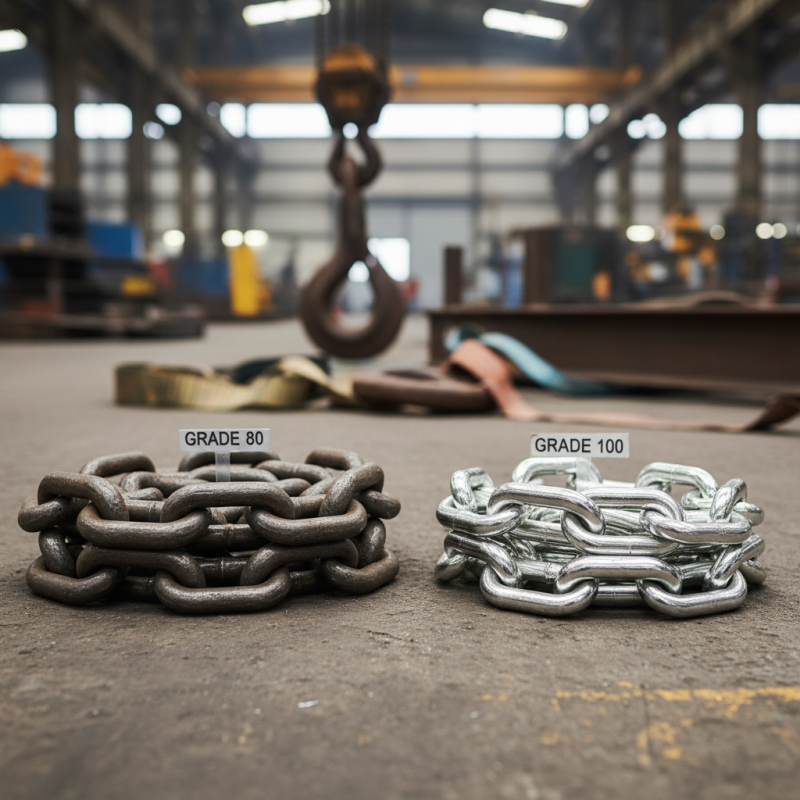
What is the Difference Between Grade 80 and Grade 100 Chains?

Understanding Chain Grades: An Overview of Grade 80 and Grade 100

When comparing grade 80 and grade 100 chains, understanding their specifications is crucial. Grade 80 chains are designed for general lifting and rigging applications. They are made from high-strength steel, offering a minimum breaking strength of 8,000 pounds for every ton of weight. This makes them reliable for various heavy-duty tasks.

On the other hand, grade 100 chains represent a step up in strength and performance. These chains provide a minimum breaking strength of 10,000 pounds per ton. They are often preferred for more demanding applications. The material is more robust, which increases resistance to wear and fatigue.

However, it is essential to consider your specific needs. Grade 80 may suffice for lighter duties. Some users might overlook this. Therefore, always assess your load requirements. Choosing the wrong chain can lead to accidents or inefficiencies. Awareness of the specific functions and limitations of each grade is vital for safe operations.

Key Specifications and Standards for Grade 80 Chains

When discussing Grade 80 chains, it's essential to focus on their specifications and standards. Grade 80 chains are constructed from heat-treated alloy steel, resulting in a minimum breaking strength of 80,000 pounds per square inch (psi). This grade is increasingly favored for lifting applications due to its high strength and lightweight attributes. In addition, they typically meet the standards set by the American National Standards Institute (ANSI) and the Association for Iron and Steel Technology (AIST), ensuring quality and reliability in various applications.

Grade 80 chains come with distinct features that contribute to their efficacy. They are often used in rigging and heavy-hauling applications. The design of these chains reduces the risk of elongation and deformation under load. Reports indicate that, under specific conditions, they can handle loads that exceed 20% of their rated capacity. This performance, however, invites scrutiny regarding safety factors. Users must consistently evaluate the conditions of use to prevent failure. The wear patterns and potential corrosion can compromise their load-bearing capabilities over time.

Understanding these specifications helps users make informed decisions. The importance of regular inspections cannot be understated. As chains endure wear, fatigue may render them unsafe. Therefore, adhering to maintenance guidelines is critical. Some industry studies suggest that up to 30% of accidents stem from equipment fatigue, emphasizing the need for awareness in usage.

Key Specifications and Standards for Grade 100 Chains

Grade 100 chains are engineered for higher performance than Grade 80 chains. They offer superior strength and durability, making them the preferred choice for demanding lifting applications. Grade 100 chains can handle heavier loads with a smaller diameter compared to Grade 80 chains. This makes them more efficient in tight spaces. The increased tensile strength allows for more effective use in various applications, from construction to industrial settings.

Key specifications for Grade 100 chains include their heat-treated alloy steel construction. This process improves the chain's overall strength and wear resistance. Chains are often marked clearly to indicate their grade. This ensures safety and compliance with industry standards. Working load limits for Grade 100 are significantly higher, which boosts productivity. However, it's essential to understand how to properly use these chains. Misuse can lead to failure, compromises safety, or cause accidents.

Chain performance is also affected by environmental factors like corrosion. Regular inspection and maintenance are crucial to maintaining integrity. Users must be aware of these details to avoid potential pitfalls. The differences in grades highlight the importance of selecting the right chain type based on specific tasks. Understanding each chain's limitations and capabilities is vital for safe operations.

What is the Difference Between Grade 80 and Grade 100 Chains?

Specification Grade 80 Chains Grade 100 Chains
Material Strength High Strength Alloy Steel Higher Strength Alloy Steel
Ultimate Strength Approximately 80,000 psi Approximately 100,000 psi
Weight Capacity Lower Load Capacity Higher Load Capacity
Applications General Lifting Heavy Lifting
Certification Standards ASTM A 3 ASTM A 3 & A 391
Fatigue Resistance Standard Enhanced

Comparative Strength and Load Capacity of Grade 80 vs. Grade 100

When comparing Grade 80 and Grade 100 chains, strength is a critical factor. Grade 80 chains are designed to handle heavy lifting tasks, with a capacity of about 8,000 pounds for 3/8-inch links. This makes them a reliable choice for many industrial applications. However, Grade 100 chains surpass them, offering around 10,000 pounds for the same link size. This enhanced strength allows for more versatile and demanding applications.

Load capacity reflects not only the material strength but also safety gains. The difference in strength can increase efficiency. A Grade 100 chain allows users to lift heavier loads without switching equipment. This can reduce downtime and streamline operations. Notably, the additional weight of stronger chains could impact overall handling. It's essential to assess if heavier chains fit your specific needs.

There are practical considerations. Grade 100 chains might not be necessary for all operations. Evaluating load requirements and safety factors is crucial. Choosing the right chain requires understanding unique workload demands. In some cases, opting for Grade 80 could be sufficient and more cost-effective. Ultimately, it's vital to balance strength needs with practical application to ensure safety and efficiency.

Applications and Use Cases for Grade 80 and Grade 100 Chains

Grade 80 and Grade 100 chains are widely used in heavy lifting applications. Grade 80 chains are often preferred for general lifting and pulling tasks. They are designed for moderate loads and offer a good balance of strength and weight. Common applications include construction sites and manufacturing facilities.

Grade 100 chains surpass Grade 80 in strength and load capacity. These chains are ideal for extreme lifting and heavy-haul applications. Industries such as oil and gas often utilize Grade 100 for demanding operations. The higher strength allows for reduced weight, leading to better efficiency in transport and lifting. According to industry reports, Grade 100 can hold up to 25% more load than Grade 80 chains of the same size.

Tips: When selecting chains, consider the specific requirements of your application. Overestimating your load can lead to accidents. Regular inspections are crucial. Chains should be checked for wear to maintain safety standards. Always consult with professionals to ensure correct specifications are met.

Comparison of Grade 80 and Grade 100 Chains

This chart presents a comparison between Grade 80 and Grade 100 chains. Grade 80 chains have a working load limit of 8 tons and an average cost of $200 per ton, whereas Grade 100 chains have a higher working load limit of 10 tons and a cost of $250 per ton. This visualization highlights the strength and cost differences between the two grades.

FAQS

: What is the strength difference between Grade 80 and Grade 100 chains?

: Grade 80 chains handle about 8,000 pounds, while Grade 100 can lift around 10,000 pounds.

When should Grade 80 chains be used?

Grade 80 chains are suitable for general lifting and pulling tasks with moderate loads.

What are the benefits of using Grade 100 chains?

Grade 100 chains offer higher strength and load capacity, allowing for more demanding applications.

How does load capacity affect efficiency?

With Grade 100 chains, users can lift heavier loads without equipment changes, reducing downtime.

Are Grade 100 chains always necessary?

Not always. Evaluate your load requirements and safety factors before choosing a chain grade.

Why is chain weight important to consider?

Heavier chains might complicate handling. It's vital to assess if they fit your work conditions.

What should be checked during chain inspections?

Regularly inspect for signs of wear to maintain safety standards and prevent accidents.

How can improper load estimates cause issues?

Overestimating loads can lead to hazardous situations. Always calculate accurately for safety.

Can Grade 80 chains be more cost-effective?

Yes, for some operations where high strength isn’t needed, Grade 80 may be a more affordable option.

What industries commonly use Grade 100 chains?

Industries like oil and gas utilize Grade 100 for extreme lifting and heavy-haul operations.

Conclusion

When considering lifting and rigging applications, a common question that arises is "What is the difference between Grade 80 and Grade 100 chains?" Both grades are commonly used in heavy lifting, but they have distinct specifications and capabilities. Grade 80 chains are known for their high strength and are typically used in applications requiring reliable performance, while Grade 100 chains offer even greater strength and are ideal for more demanding tasks.

Understanding key specifications is crucial. Grade 80 chains are characterized by a specific load capacity and adhere to certain standards, while Grade 100 chains have superior load ratings and are constructed to withstand more stress. The comparative strength and load capacity of these chains make Grade 100 chains suitable for applications that demand higher performance and safety margins. Consequently, selecting the appropriate chain grade based on the intended use is essential for achieving optimal efficiency and safety in handling heavy loads.

Charlotte

Charlotte

Charlotte is a seasoned marketing professional with a deep understanding of the company's portfolio and a passion for elevating its presence in the market. With a keen eye for detail and a commitment to excellence, she ensures that our professional blog is regularly updated with insightful articles......