How to Identify Counterfeit Lifting Components?

Time:2026-11-22 Author:Sienna
0%

A lifting component can look convincing on a workshop bench and still be counterfeit. A forged shackle may carry polished markings, a familiar logo, and a load rating that seems credible. Those details are not proof. How to identify counterfeit lifting components starts with checking whether the part’s identity, manufacturer, and records agree. A mismatch deserves attention.

LEEA CEO Ross Moloney has emphasized the importance of competence and safe practice in lifting operations. A practical paraphrase for this subject—not a verbatim quotation—is: “A component’s identity and history matter as much as its appearance.” That distinction guides this introduction. Compare markings with the manufacturer’s product information, inspect certificates and traceability records, and buy through an authorized, verifiable supplier. Look closely at the material, finish, dimensions, and stamped characters; uneven lettering or unexplained differences can be warning signs. Do not rely on appearance alone.

This guide will outline checks for documentation, markings, suppliers, and physical condition. It will also explain when to stop using a suspect component and ask a competent lifting-equipment professional to assess it. A photograph can help, but it cannot confirm authenticity. In practice, records may be incomplete, and genuine parts can show wear. That uncertainty matters. When the evidence does not line up, quarantine the item from service until its origin and suitability are verified. Safety decisions should rest on traceable evidence, not a confident sales pitch.
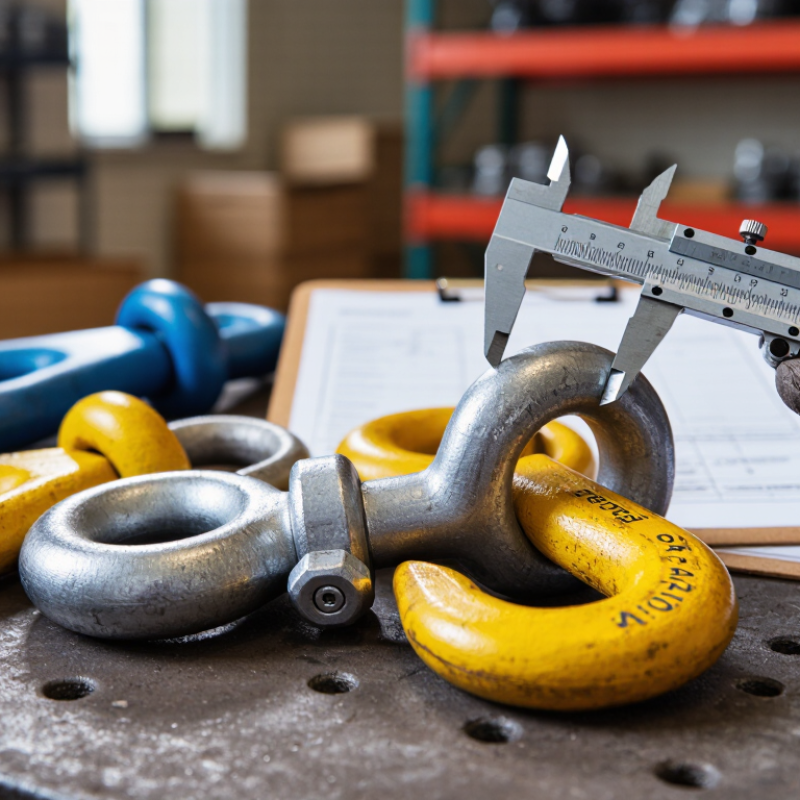
How to Identify Counterfeit Lifting Components?

Types and Roles of Lifting Components

Lifting systems are assemblies of parts, and each part controls a different risk. Slings connect the load to the lifting point; they may be made from wire rope, chain, or synthetic webbing. Shackles join components, while hooks provide a load-bearing connection with a closing latch. Master links gather multiple sling legs. Small parts matter.

These components work together, but they are not interchangeable. A hook’s shape and latch help keep a connection in place; a shackle’s pin must fit and secure correctly. Wire rope relies on its strands and end fittings, while synthetic slings need intact stitching and protective sleeves. Each item should match the load, lifting arrangement, and equipment specifications. A rating on one component does not establish the capacity of the whole assembly.

When checking for counterfeit or unsuitable parts, compare markings and dimensions with supplier documents and the manufacturer’s specifications. Look for clear identification, a stated working load limit, and traceable inspection records. Inspect pins, welds, stitching, and rope strands for uneven finish, damage, or inconsistent details. It is easy to overvalue neat paint; that judgment can be wrong. Visual checks have limits, too. If markings are missing or a part’s history is uncertain, keep it out of service until a qualified person verifies it.

Verify Manufacturer Markings and Product Traceability

Counterfeit lifting components can look convincing at a glance. A clear stamp is only a starting point. Check the manufacturer name, model or grade, rated capacity, batch or serial number, and any applicable standard marking against the supplied documents. Details should match across the component, label, certificate, and purchase record. Inspect under good light. Uneven lettering, shallow marks, fresh grinding, or paint covering an identification area deserve a pause, not an assumption.

Traceability records should link the item’s identifier to manufacturing and inspection records. Ask the supplier to clarify gaps and confirm the information through contact details obtained independently. A certificate without a matching identifier is weak evidence. So is a reassuring sales message. Markings can be copied, and paperwork can be incomplete. If something does not align, do not put the component into service; have it reviewed by a competent person. Small inconsistencies matter.

Tips: Photograph the markings and the full component. Record the delivery date and document numbers. Keep the evidence together. A quick check helps, but it cannot replace proper inspection.

How to use this workflow: Check the component’s markings, confirm its rated capacity, match its identifiers to accompanying records, and verify those records with the manufacturer or an authorized source. The chart shows a recommended check order, not measured test results or a pass/fail score.

Inspect Materials, Workmanship, and Physical Condition

Counterfeit lifting components can closely resemble genuine parts, so shape and finish alone are not proof. Check the material for consistent dimensions, clean edges, and a uniform surface. Look for cracks, pitting, unexpected discoloration, or signs of grinding. Small clues matter. A polished surface can hide a flaw, while roughness alone does not prove a component is counterfeit.

Examine workmanship closely. Uneven weld beads, sharp burrs, poorly cut threads, and pins that fit loosely may indicate poor manufacture or damage. Compare markings, dimensions, and component details with the relevant technical records. Treat weight as one clue, not a verdict. A tidy finish can mislead, and even a careful visual check has limits.

Inspect the component’s physical condition before use. Deformation, corrosion, deep scratches, or heat marks can weaken a part, regardless of its origin. Do not guess. If markings conflict with records or a defect raises concern, take the component out of service and have it assessed by a qualified person. Avoid improvised load tests; they may create additional hazards without confirming the part’s history or capacity.

How to Identify Counterfeit Lifting Components? - Inspect Materials, Workmanship, and Physical Condition

Inspection Area What to Check Potential Warning Signs Recommended Action
Material and finish Inspect the component under good lighting for consistent material, finish, and surface condition. Compare it with the applicable specification or a verified example of the same type and size. Unexpected porosity, cracks, laminations, inclusions, uneven coating, or a finish that differs noticeably from the specification. Appearance alone cannot confirm material grade. Do not rely on visual inspection to establish alloy or strength. If material identity is in doubt, quarantine the item and arrange suitable testing through a qualified party.
Workmanship and construction Check for uniform forging or casting, clean transitions, secure pins and retainers, sound welds where applicable, and smooth, functional moving parts. Rough or inconsistent surfaces, incomplete welds, visible weld repairs, mismatched parts, loose retainers, poor threading, or sharp burrs in load-bearing areas. Remove from service if a defect could affect strength or safe operation. Have the component assessed by a competent person; do not repair or modify it without authorized instructions.
Markings and identification Check the markings required for that component and applicable rules, such as working load limit (WLL), grade or type, size, and manufacturer or traceability identification where required. Missing, illegible, inconsistent, altered, or suspiciously re-stamped markings; conflicting load ratings; or markings that do not match accompanying records. Marking requirements vary by component and jurisdiction. Verify details against the applicable standard and traceable documentation; do not infer a rating from appearance or markings alone.
Dimensions and fit Measure critical dimensions and confirm compatibility with the connected chain, sling, pin, hook, or fitting using the relevant specification. Dimensions outside specified tolerances, poor fit, unexpected gaps, incorrect pin diameter, or parts that bind or do not seat correctly. Do not force incompatible parts together. Keep the item out of service until its size, rating, and compatibility have been verified.
Physical condition Inspect for deformation, cracks, excessive wear, corrosion, heat damage, and other defects using the inspection criteria for the component type. Bent hooks, stretched links, damaged threads, distorted shackles, deep gouges, severe corrosion, or evidence of unauthorized welding or heating. Damage does not by itself prove counterfeiting, but it can make a component unsafe. Withdraw suspect items from service and follow the applicable inspection and rejection criteria.
Records and traceability Review purchase and inspection records, certificates supplied for the item, batch or serial references, and consistency between documents and physical markings. Unverifiable or altered documents, missing traceability, inconsistent descriptions or ratings, or records that cannot be linked to the specific component or batch. Request verification from the documented source. Treat an unresolved identity or traceability concern as a reason to quarantine the item pending competent assessment.

Note: A warning sign is not proof that a component is counterfeit. Counterfeit identification and fitness-for-service decisions should be handled by a competent person using the applicable standards, inspection criteria, and traceable records.

Compare Ratings and Documentation with Applicable Standards

A counterfeit lifting component may carry a convincing mark, but its rating must match the paperwork and the relevant standard. Check the working load limit, grade, size, and identification code against the certificate and product markings. For rigging hardware, compare the claimed standard and component type with the applicable edition of ASME B30.26 or another recognized specification. A mismatch in spelling, units, or model details deserves attention.

Documentation should identify the manufacturer, batch or serial number, material, rating, and any required test results. Confirm that these details match the component in your hand; a generic certificate is weak evidence. OECD and EUIPO estimated that counterfeit and pirated goods represented 3.3% of world trade in 2016, while noting that the figure covers many product categories, not lifting equipment specifically. The report is useful context, not proof of a lifting-sector rate.

Paperwork is not proof by itself. Inspect markings for uneven depth, blurred characters, or inconsistent spacing, then compare dimensions with the standard or approved drawing. If ratings conflict, isolate the component and ask a qualified person to verify the records with the issuing body. A clean certificate can still leave questions unanswered. Keep the comparison record, including photos and the document revision checked.

Seek Qualified Inspection Before Use if Authenticity Is Uncertain

A questionable lifting component is not merely a paperwork problem; it can fail under load. Look for mismatched markings, shallow or uneven stamps, inconsistent dimensions, rough seams, or a finish that may hide cracks. These clues raise concern, but none proves authenticity. A convincing surface can still conceal weak material or incorrect heat treatment.

If the maker, grade, working load limit, or batch number cannot be verified, stop using the component and isolate it. Do not test it with a heavier lift. Ask a qualified lifting-equipment inspector to examine it and compare its markings with traceable certificates and supplier records. Visual inspection alone cannot confirm strength. The U.S. Bureau of Labor Statistics counted 5,283 fatal work injuries across all U.S. industries in its 2023 Census of Fatal Occupational Injuries. That figure is not specific to counterfeit equipment, but it underscores why uncertainty needs a controlled response.

Tips: Photograph the markings, measure the component, and record its source. Keep it out of service until an inspector confirms it is suitable. If the evidence remains incomplete, replacement may be the safer choice.

FAQS

What are the main parts of a lifting assembly?

Slings connect the load to a lifting point. Shackles join parts, hooks make load-bearing connections, and master links gather sling legs. Small details matter.

Can lifting components be used interchangeably?

No. Each part has a different role and must suit the load, arrangement, and equipment specifications. A matching shape alone is not enough.

Does one component’s rating confirm the whole assembly’s capacity?

No. The capacity of one part does not establish the capacity of the complete assembly. Check that every component is suitable.

What markings should I check on a component?

Look for clear identification, grade or model, working load limit, and batch or serial number. Compare these details with the supplied records.

What signs may deserve closer inspection?

Check for uneven stamps, rough seams, unusual dimensions, damaged stitching, worn rope strands, or suspicious paint. A tidy finish can mislead us.

Can visual checks prove that a component is safe?

No. Visual inspection has limits and cannot confirm material strength or treatment. A convincing surface may hide a problem.

What should I do if the markings or records do not match?

Keep the component out of service and isolate it. Ask a qualified inspector to review the item and traceable records. Do not test it with a heavier lift.

What information should I keep when checking a component?

Photograph the full component and its markings. Record its dimensions, delivery date, source, and document numbers. Keep the evidence together.

Conclusion

How to identify counterfeit lifting components begins with understanding the role of each item, such as hooks, shackles, slings, and connecting links, and checking that its design suits the intended lifting task. Examine manufacturer markings and traceability details for clarity and consistency, and compare them with the supplied product records. Missing, altered, or mismatched information may warrant further investigation.

Next, inspect the component’s material, finish, workmanship, and physical condition for signs of poor construction, unusual wear, cracks, deformation, or other damage. Confirm that its rated capacity and identification details match the documentation and applicable standards for the equipment. If anything appears inconsistent, unclear, or questionable, do not rely on appearance alone: have the component assessed by a qualified lifting equipment professional before use. Careful verification helps support safe selection and use.

Sienna

Sienna

Sienna is a skilled marketing professional with a deep expertise in our company’s core products and services. With a passion for innovation and detail, she plays a pivotal role in crafting insightful blog posts that not only highlight the unique features of our offerings but also provide valuable......