Choosing the right lifting capacity for a hoist is crucial for safety and efficiency. According to industry expert John Smith, "Selecting the appropriate lifting capacity is the backbone of successful hoisting operations." This statement emphasizes the importance of understanding the hoist's load limits. Miscalculations can lead to accidents, equipment damage, and increased costs.
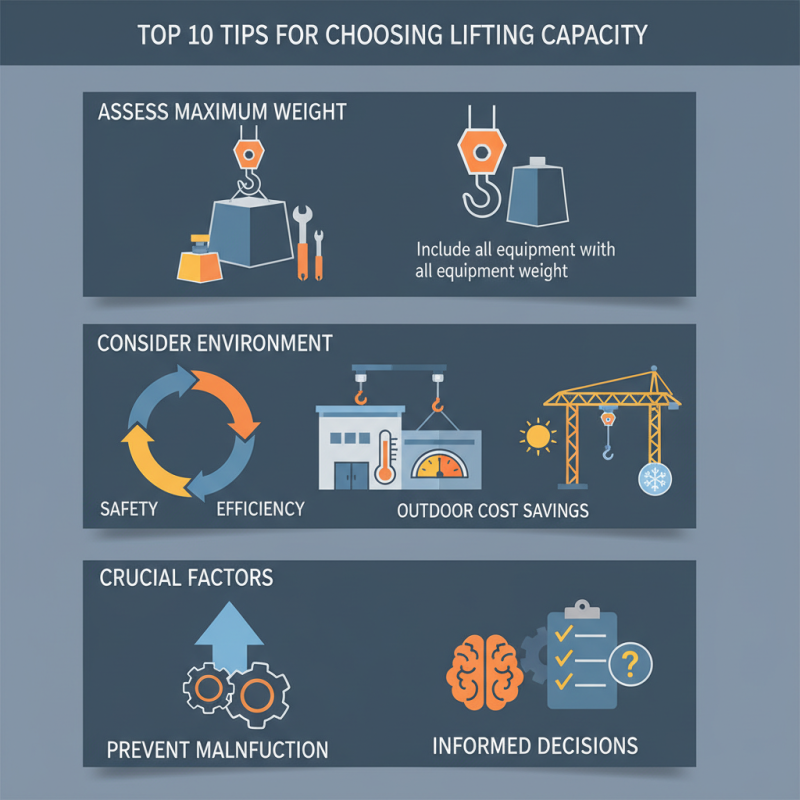
When considering how to choose the right lifting capacity for a hoist, several factors come into play. First, assess the maximum weight you plan to lift. It’s essential to factor in not just the load itself but also any additional equipment that may be attached. Remember, accurate assessments can prevent malfunction and ensure smooth operations.
Additionally, consider the environment in which the hoist will operate. Is it indoors or outdoors? Will it face extreme temperatures? These details impact the overall performance and safety of your hoisting system. Reflecting on these aspects can avoid pitfalls in your selection process. Ultimately, understanding these elements can lead to informed decisions and a more reliable hoisting experience.
When selecting a hoist, understanding lifting capacity is crucial. Lifting capacity indicates the maximum weight a hoist can safely handle. Consider the specific needs of your projects. Not all tasks require the same capacity. Assess the heaviest load you might lift. This insight will guide your choice effectively.
One tip is to account for safety margins. Always exceed the expected weight by 20-30%. This extra capacity helps when unexpected loads arise. It also safeguards against wear and tear. Be mindful that using a hoist beyond its rated capacity can lead to accidents.
Another important factor is the hoist's lifting height. Sometimes high capacities come with trade-offs in height. Ensure that your chosen hoist meets both weight and height requirements. Consider the space where you will operate the hoist. If space is tight, a compact design could be essential. Always remember, a wrong choice can lead to frustrations and risks. So, dig deeper into your project demands before finalizing your hoist selection.
When selecting a hoist, understanding the weight of your load is crucial. Accurately measuring the weight ensures you choose the right lifting capacity. Failure to do so can lead to equipment failure or safety hazards. Consider the total load, including any attachments or additional equipment. Take precise measurements to avoid underestimating the requirements.
It's important to assess the lifting conditions as well. Are there environmental factors at play? For instance, a high-temperature environment might affect the hoist's performance. Load dynamics also matter; a static load behaves differently than a dynamic one. What is the frequency of use? High operational frequencies may require a hoist with a higher capacity than anticipated.
Reflect on the materials being lifted, too. The weight distribution can change based on material type. For example, a steel beam has a different center of gravity than a box of tools. Sometimes, load miscalculations can happen. Verification and recalibration can help prevent mishaps. Always focus on reliable data to guide your decisions.
Choosing the right lifting capacity for a hoist is crucial in ensuring safety and effectiveness. Different types of hoists come with varying capacities based on their design and intended use. For example, electric hoists typically have higher lifting capacities compared to manual ones. Understanding your specific needs will help narrow down your options significantly.
When evaluating hoist types, consider their weight limits. A common mistake is underestimating the load. Always account for the weight of the load alongside additional factors like slings and hooks. This ensures you select a hoist that can handle the job with ease.
Tip: Look for hoists with a safety margin. A hoist rated for a capacity slightly above your max load is wise. It offers peace of mind and extra reliability during operation.
Another factor to evaluate is the hoist’s working environment. Some hoists perform better in specific conditions, such as humidity or temperature extremes. If unsure, consult with experts to help you make informed decisions. They can guide you in the right direction, ensuring durability and performance meet your needs effectively.
When selecting a hoist, safety should be the primary consideration. The lifting capacity must align with the weight of the load. It’s essential to consider not just the weight but also dynamic factors. These include any potential swings or unexpected shifts during lifting. A hoist's capacity should exceed the total weight of the load by a safe margin.
Additionally, environmental conditions play a significant role in determining lifting capacity. Factors like temperature, humidity, and exposure to elements can affect a hoist’s performance. For instance, operations in wet or icy conditions may require a more robust hoist than usual. Inspecting the hoist regularly is necessary. Wear and stress over time can reduce its effectiveness.
Ignoring these considerations can lead to dangerous situations. An overload can cause equipment failure, resulting in severe accidents. Proper training for operators is equally crucial. Training ensures those involved understand the limits and safety protocols. The right lifting capacity, combined with safety measures, creates a secure working environment. It's vital to reflect on these aspects before making a choice.
When selecting the right lifting capacity for a hoist, understanding frequency and duration of use is crucial. Frequent use can significantly affect the lifespan and functional efficiency of the hoist. According to the American Society of Mechanical Engineers (ASME), hoists should be evaluated based on operational cycles per day. For example, a hoist used continuously for multiple shifts may require a higher capacity and more robust design compared to one used sporadically.
Durational factors also play a significant role. In many industries, including construction and manufacturing, job sites often report that hoists are in operation for 60% of their workday. This statistic highlights the importance of selecting a hoist that can handle not only the weight of loads but also the sustained use over time. Overlooking these factors can lead to premature wear and potential safety hazards. It's vital to assess specific task requirements and employee input to make the best choice.
Moreover, heavy-duty hoists that operate under high usage often see stress-related failures. A study by the Occupational Safety and Health Administration (OSHA) found that improper selection of lifting equipment accounts for 20% of workplace injuries. These insights stress the need for thorough analysis in capacity planning. Often, organizations underestimate their needs, leading to increased costs and safety risks in operations. Understanding real-world usage scenarios can ensure reliability and efficiency in your choice.
: Accurate weight measurement ensures the selection of the right lifting capacity, preventing equipment failure and safety hazards.
Environmental conditions, load dynamics, and the frequency of use all impact lifting performance and equipment choice.
Different materials have varying weight distributions and centers of gravity, which can influence lifting requirements.
Overloading can cause equipment failure, leading to severe accidents and injury, emphasizing the need for proper capacity calculations.
Regular inspections identify wear and stress over time, ensuring hoists remain effective and safe for use.
Frequent use requires more robust hoists to handle operational stress and to extend the equipment's lifespan effectively.
Misjudging capacity needs often leads to equipment failure, increased costs, and safety risks, according to industry studies.
Proper training ensures operators understand limits and safety protocols, reducing the risk of accidents and equipment misuse.
Understanding specific task needs helps in selecting the right hoist, preventing premature wear and enhancing operational reliability.
Verification and recalibration of measurements can reduce the likelihood of load miscalculations and potential mishaps.
Choosing the right lifting capacity for a hoist is crucial for ensuring safe and efficient material handling. To effectively navigate this process, it's important to first understand lifting capacity and the specific requirements of your load. Accurately identifying the weight and nature of what you intend to lift will guide your decisions. Different hoist types have varying capacities, so evaluating which type aligns with your needs is essential.
Safety factors must also be considered in the lifting capacity calculation, as they ensure that the hoist is sufficient for unexpected load conditions. Furthermore, assessing how frequently and for how long the hoist will be in use will influence the appropriate lifting capacity, as heavy and continual use may require higher capacity to maintain performance and safety. By following these guidelines, you can determine how to choose the right lifting capacity for a hoist that meets your operational demands.

Glinder lift